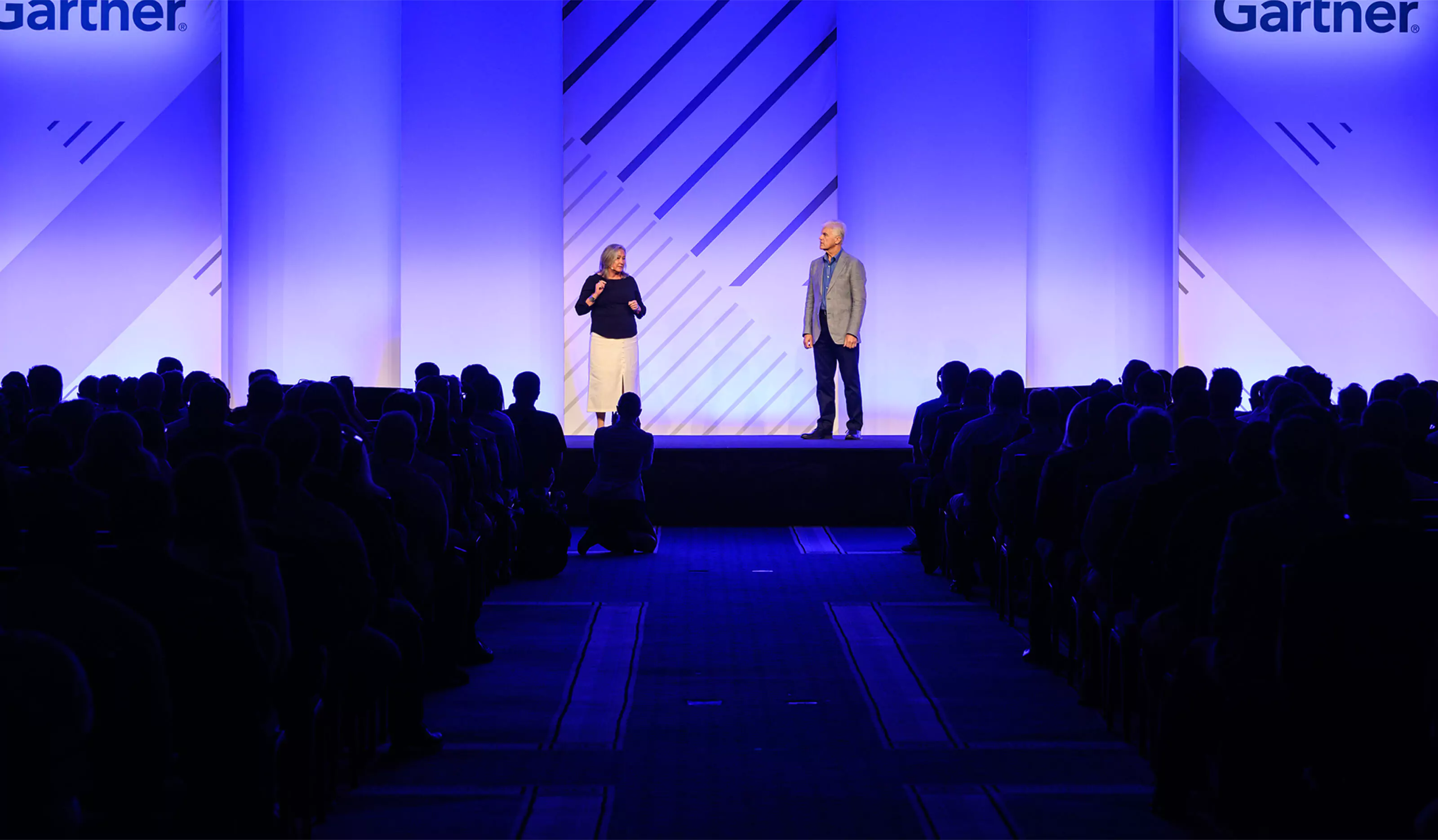
Netdata exhibited at the Gartner IT Infrastructure, Operations & Cloud Strategies Conference (IOCS) 2025, December 9–11 at The Venetian in Las Vegas. We were at Booth #636 in the Solution Village: Operations section, running live demos every 30 minutes and meeting with IT leaders from enterprises and mid-market organizations.
The highlight was Costa Tsaousis’s talk on December 11 at 12:30 PM PST in Theater 3: “Why 80% of Organizations Will Overspend for Observability in 2026.” The thesis was direct. Legacy observability tools have a broken economic model – they charge by data volume, which means the more you monitor, the more you pay. That creates a perverse incentive to sample, average, and reduce data, which in turn creates blind spots. Organizations end up paying more for less visibility. Costa walked through how sampling at 15–60 second intervals masks the very spikes and anomalies that cause incidents, and how that hidden cost – longer MTTR, more outages, more manual investigation – often exceeds the monitoring bill itself.
The alternative Costa presented: per-second visibility with a flat per-node pricing model. No penalties for collecting more data. No incentive to reduce fidelity. Distributed agents that process data at the edge, so the architecture scales without a centralized backend that becomes both a bottleneck and a cost center.
Gartner IOCS draws a senior audience – directors, VPs, and CIOs who control infrastructure budgets. The observability overspend message resonated because these are the people who see the bills. When you show them that their current tool charges more while delivering 60-second averages, and an alternative delivers per-second data at a fraction of the cost, the conversation shifts from “why should we switch” to “how fast can we run a proof of concept.”