


See Everything Without Changing Anything
Monitor every process, container, and system call from installation. No code changes. No application restarts. No SDK installation. Complete infrastructure observability in 60 seconds.

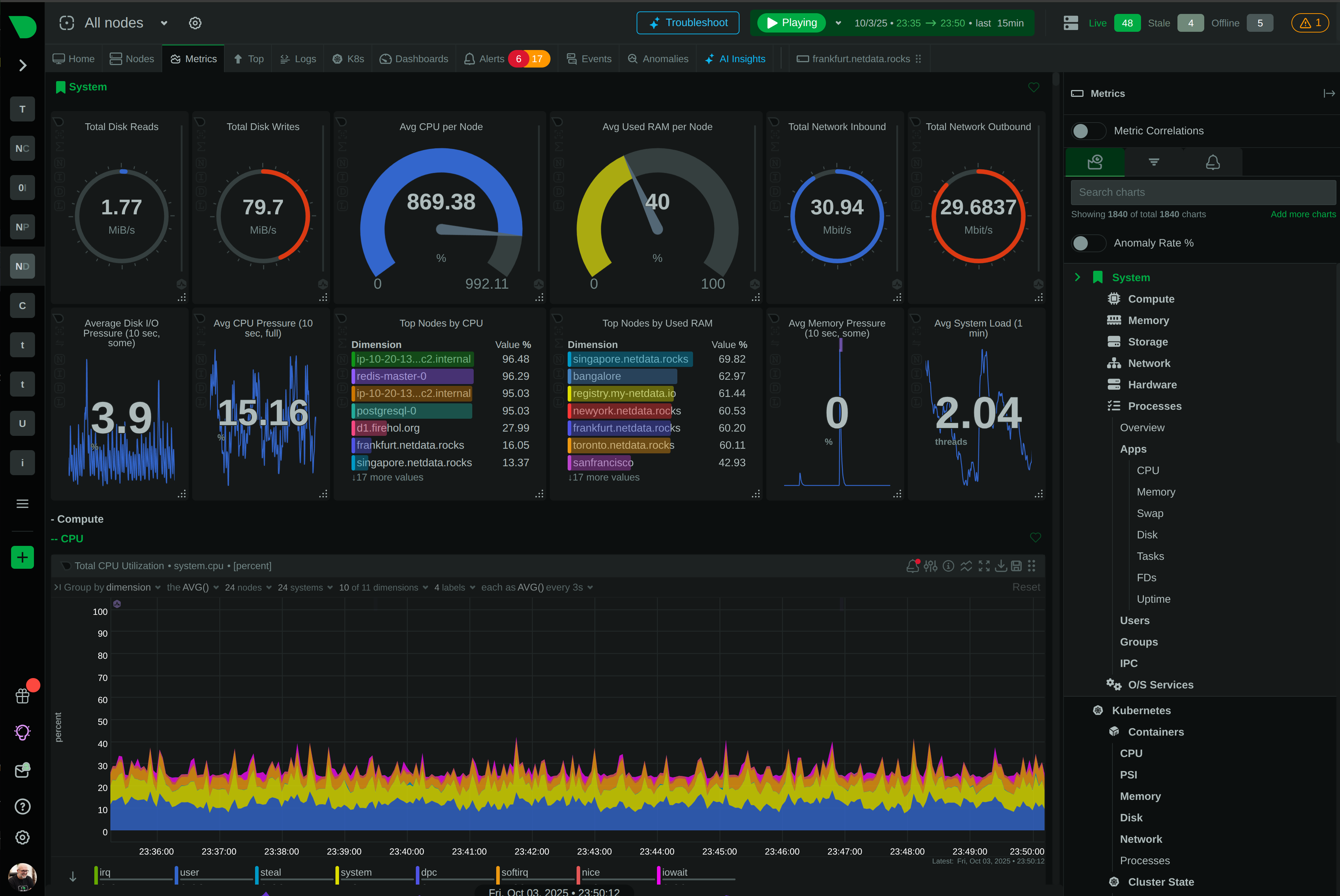
Monitor every process, container, and system call from installation. No code changes. No application restarts. No SDK installation. Complete infrastructure observability in 60 seconds.

Complete visibility from kernel to application
60 seconds from installation to complete infrastructure visibility. Zero configuration required.
Every process monitored automatically - system daemons, applications, containers, shell scripts - regardless of language.
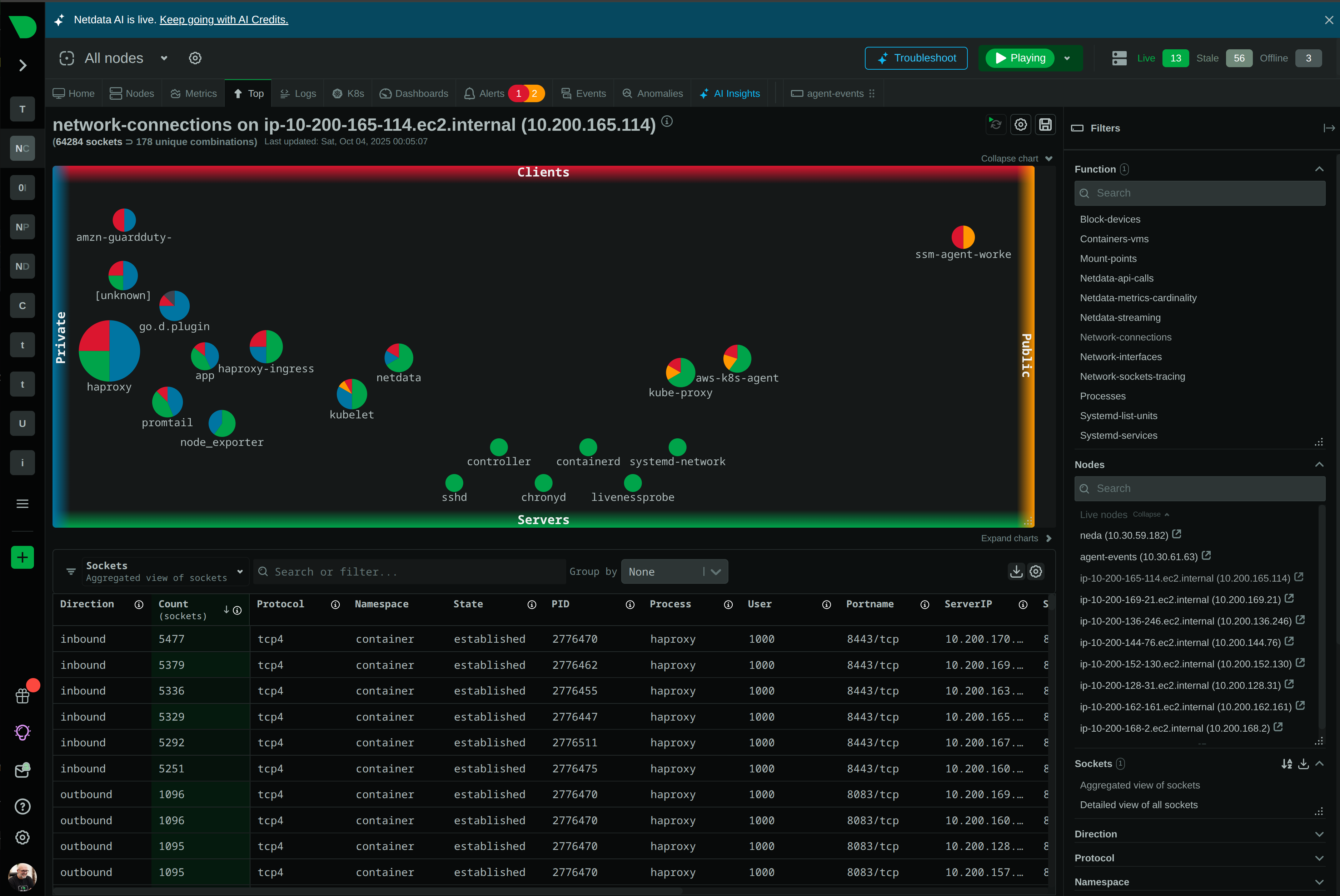
eBPF instrumentation reveals syscalls, network operations, and filesystem activity without touching application code.
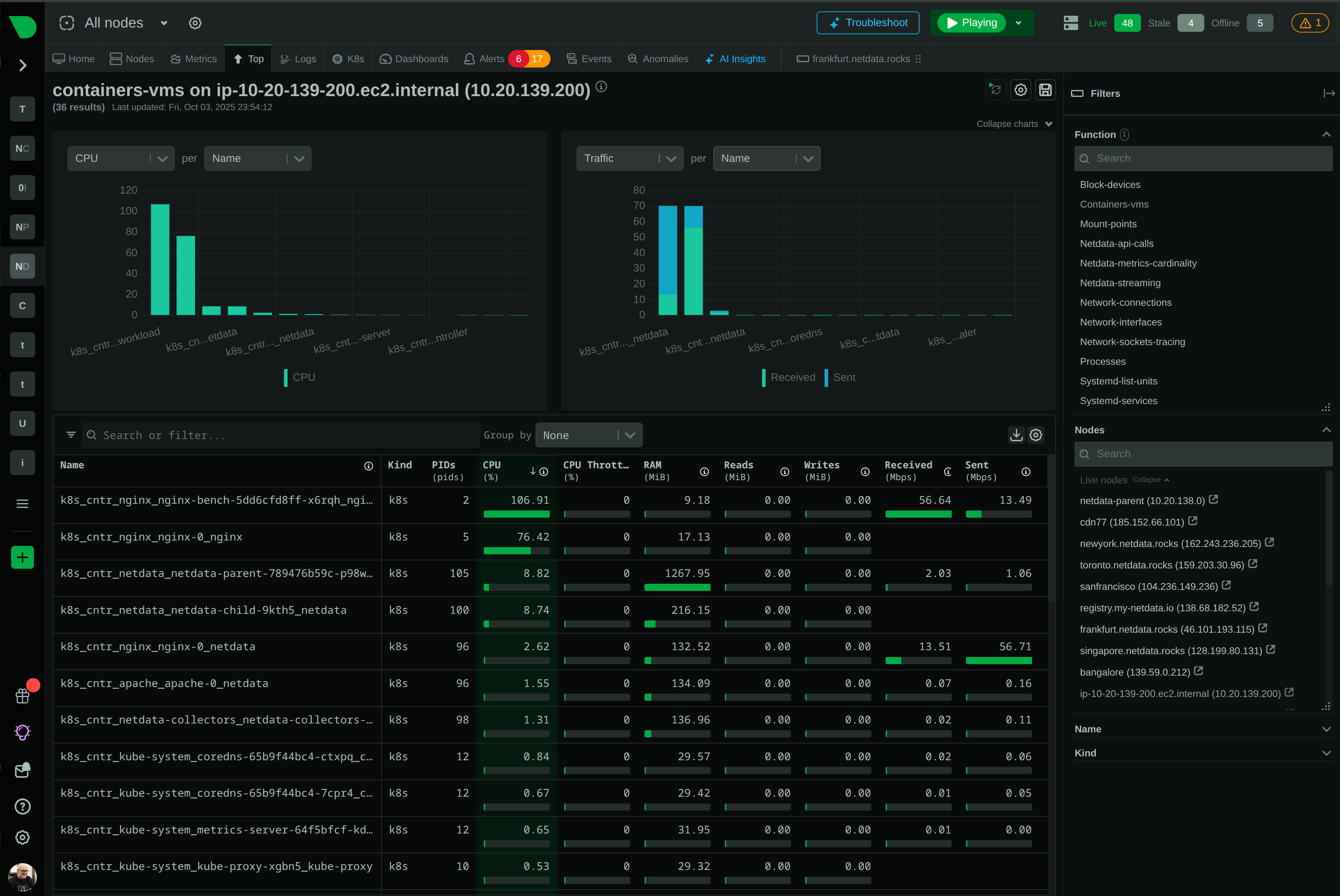
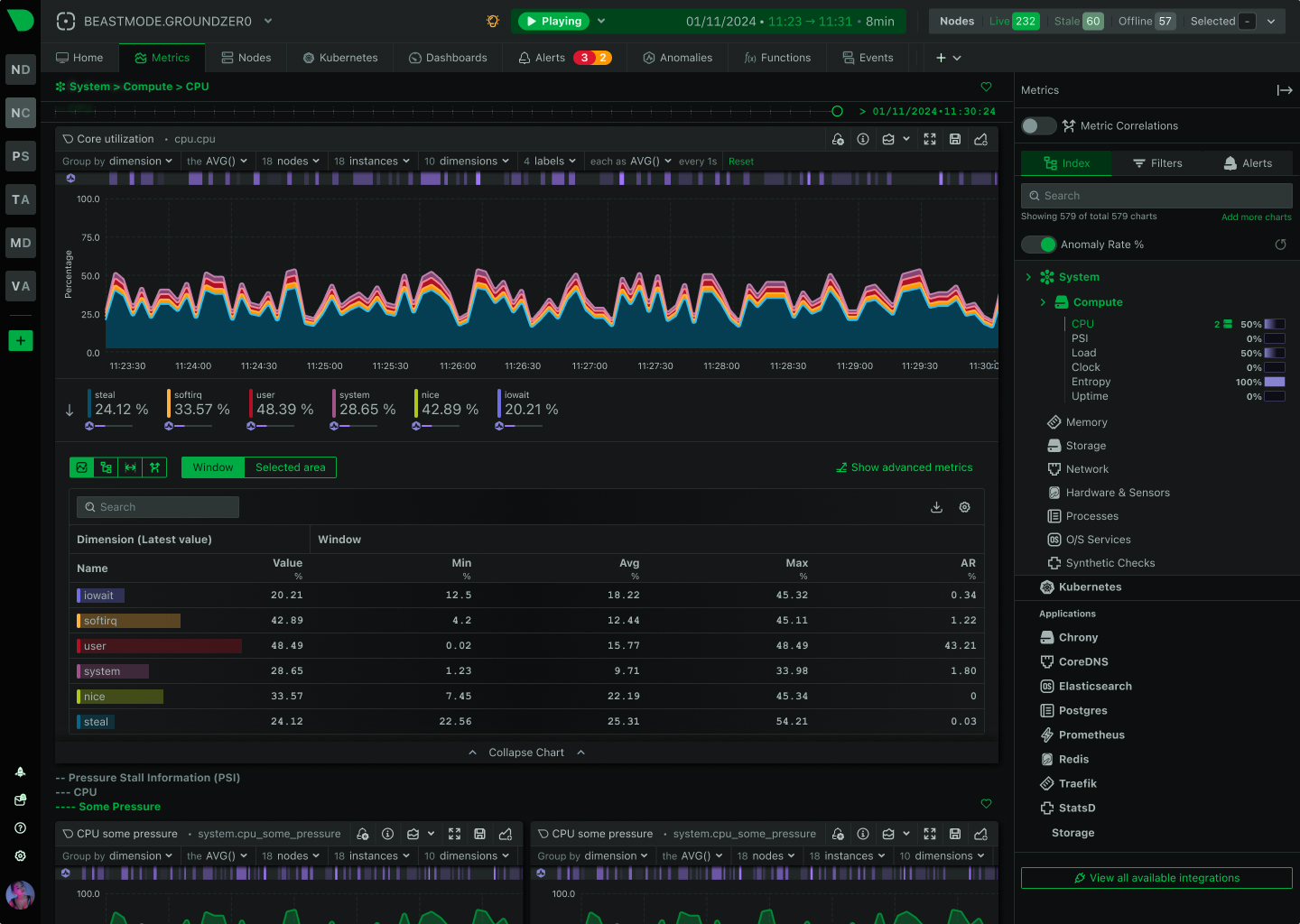
Automatic discovery and monitoring of Docker, Kubernetes, LXC containers with resource accounting and lifecycle tracking.
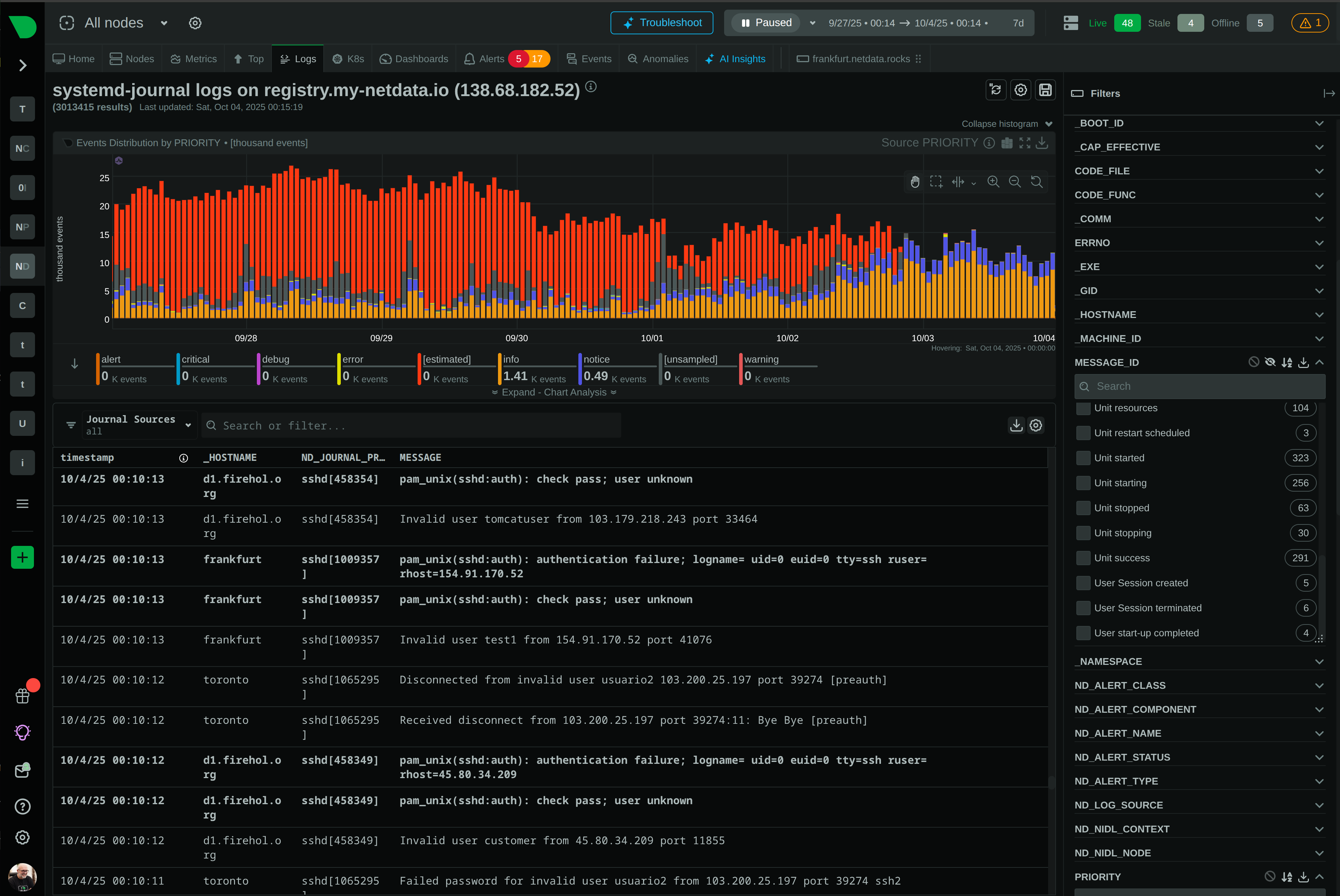
Direct systemd-journal and Windows Event Log access eliminates shipping infrastructure while maintaining full indexing.
Infrastructure changes detected automatically - new services, containers, and processes monitored without configuration updates.

Trusted by operations teams managing complex infrastructure
3,000-20,000 metrics/sec per node
Learn about process monitoring

<1% CPU overhead typical
Explore eBPF capabilities

800+ integrations
View all integrations

Per-second container metrics
Container monitoring details

200× query accuracy
Zero-pipeline logs explained

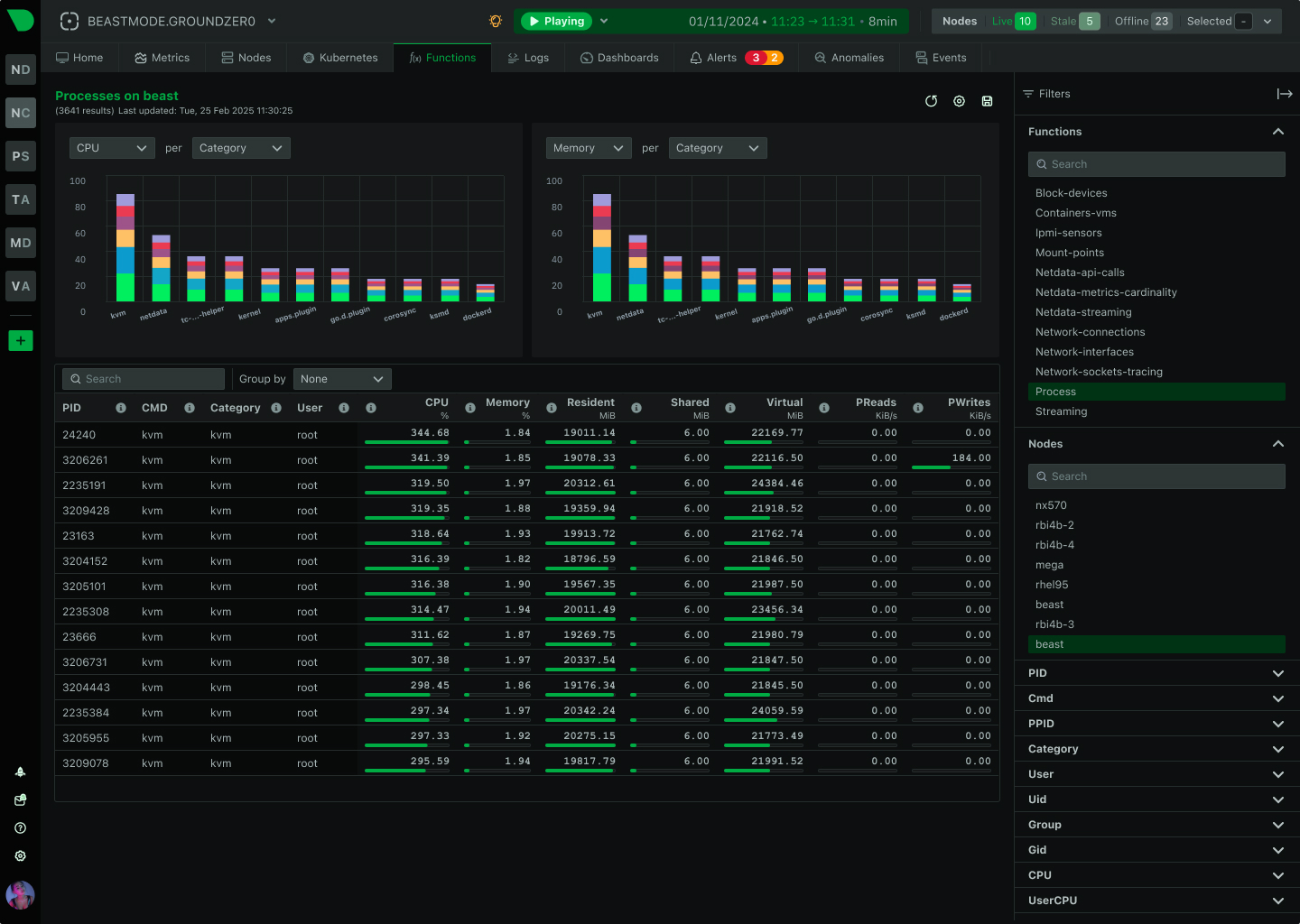
Dozens of console tools unified
Explore Netdata Functions

Zero-Code Reality Check
Netdata provides genuinely zero-code infrastructure observability - no application restarts, no SDK installation, no language limitations. Application-focused tools require instrumentation despite zero-code claims.
Capability
Netdata
Application APM Tools
Application code changes
✅ Zero
Literally no code modifications required
✅ Zero
But requires agent installation and restart
Application restarts required
✅ Not Required
Monitor running processes without interruption
⚠️ Required
Agent installation requires application restart
Language/runtime limitations
✅ Universal
Works with any language or runtime
⚠️ Limited
Specific language agents required
Monitors uninstrumentable processes
✅ Advanced
System services, shell scripts, legacy apps
❌ Not Available
Only instrumented applications visible
Kernel-level visibility
✅ Advanced
eBPF syscalls, network, filesystem operations
❌ Not Available
Application-level metrics only
Short-lived process tracking
✅ Advanced
Shell scripts, cron jobs, subprocesses
⚠️ Limited
May miss ephemeral processes
Container monitoring independence
✅ Kernel-Based
cgroups accounting independent of runtime
⚠️ Runtime-Dependent
Requires container runtime integration
Log management approach
✅ Zero-Pipeline
Direct journal access, no shipping
⚠️ Pipeline-Based
Requires log shipping infrastructure
Time to first visibility
✅ 60 Seconds
Installation to complete infrastructure view
⚠️ Hours to Days
Configuration and integration required
Configuration required
✅ Zero
Auto-discovery and algorithmic dashboards
⚠️ Moderate
Service configuration and dashboard building
eBPF instrumentation attaches to internal kernel functions, capturing syscalls, network operations, filesystem I/O, and memory management for all processes. Runs on host only - does not run in containers or Kubernetes. Requires kernel 4.11+.
<1% CPU overhead typical
Learn about eBPF monitoring
Zero-code instrumentation delivers comprehensive infrastructure visibility instantly
60 seconds from installation to complete OS, kernel, process, container, network, and log monitoring without configuration.
No application code changes, no SDK installation, no language-specific agents, no application restarts required.
Track system services, shell scripts, legacy applications, and third-party software that cannot be instrumented.
eBPF reveals syscalls, network bandwidth per application, filesystem operations invisible to application monitoring.
Kernel-based cgroups accounting works regardless of container runtime - Docker, Kubernetes, LXC, Podman.
Direct journal access eliminates log shipping infrastructure while maintaining full indexing and 90% cost reduction.
Infrastructure changes detected automatically - new services, containers, processes monitored without configuration updates.
Works with any programming language, runtime, or framework without language-specific instrumentation.
Browser-based diagnostics eliminate SSH access requirements while maintaining complete troubleshooting capability.

December 1, 2025
The industry says 'monitor everything' is bad. But the same industry keeps discovering monitoring gaps during outages. What's really going on?

November 7, 2025
Join Netdata in Las Vegas for the Gartner IT Infrastructure, Operations & Cloud Strategies Conference. Don't miss our founder's talk on why 80% of organizations will overspend for observability in 2026.
November 7, 2025
Automatically create and manage ServiceNow incidents from Netdata alerts. Bridge the gap between real-time monitoring and your ITSM workflow to accelerate incident response.